77 Bloor Street West, Suite 600 Toronto, Ontario M5S 1M2



77 Bloor Street West, Suite 600 Toronto, Ontario M5S 1M2
At Benmor Family Law Group, our multi-disciplinary team of divorce experts fully understands the emotional and financial impact of divorce. That’s why we treat our clients the way we would want to be treated. Whether we help you through separation, divorce, mediation, divorce coaching, or parenting coordination, our full-service family law firm expertly supports you, guides you, and represents you - throughout your case.
We also understand that hiring a full-service law firm is not feasible or appropriate in every situation. Sometimes, you just need strategic legal advice from a Senior Divorce Lawyer at key stages of the process. Therefore, we also offer the option of booking a Divorce Strategy Session to get the expert insight, answers, and guidance you need to feel confident about your next legal move.
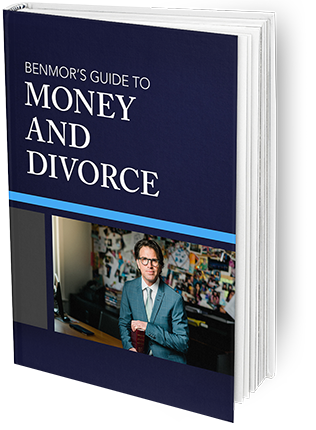
Steve Benmor is a recognized divorce lawyer, family mediator, arbitrator, speaker, writer and educator. Mr. Benmor has worked as lead counsel in many divorce trials, held many leadership positions in the legal community and has been regularly interviewed on television, radio and in newspapers as an expert in Family Law. As one of Toronto’s 24 Certified Specialists in Family Law, as one of Canada’s 56 Fellows of the prestigious International Academy of Family Lawyers and as a Master of Laws in Family Law...
During marriage, many families accumulate assets such as real estate, cars, home furnishings, pensions, RRSP’s, and even debts and loans. All these items need to be shared at separation.
One of the most common mistakes that people make with their finances during divorce is not being well informed and not receiving legal advice until it is too late. Making sure you understand your legal rights early is essential to your financial security.
learn more
The team of professionals at Benmor Family Law Group possesses the unique skills and sensitivity to achieve success for their clients. Any person faced with divorce or separation must be able to find a team of professionals who are committed, determined and experienced to negotiate the most favourable settlement for their client, or, if necessary, forcefully advocate their client's rights in court.
Our Mission Statement: For over 30 years, Steve Benmor and his team of divorce professionals have successfully helped his clients stay out of divorce court, keep their costs down, avoid conflict and reach an amicable divorce settlement.
Our Vision: Steve Benmor and his team of divorce professionals believe that the most important things in life are family, children and having healthy relationships. They are concerned with the hardship that parents and children endure at the end of a marriage. Their every action is to protect their clients and plan for their happy future. The qualities that motivate the group are compassion, integrity, expertise and confidence. Each client is part of the team and, together, they navigate their life transition with regular communication, empathy, clarity, transparency and hope. The team’s knowledge, expertise and hard work ethic has been demonstrated for over 30 years.

The ‘Canada Child Benefit’, called the ‘CCB’ in this article, is a tax-free monthly payment to parents to help with the cost of raising children under 18 years of age and is administered… Continue Reading…

Divorce is not just a legal document that dissolves a marriage. It is a highly emotional, personal and intimate event in the life of a family. Those with children experience… Continue Reading…

Spouses who are undergoing separation and divorce are often living in very uncomfortable circumstances. While their family life is falling apart, they still need to manage their children’s lives, their… Continue Reading…
The ‘Canada Child Benefit’, called the ‘CCB’ in this article, is a tax-free monthly payment to parents to help with the cost of raising children under 18 years of age and is administered… Continue Reading…
Divorce is not just a legal document that dissolves a marriage. It is a highly emotional, personal and intimate event in the life of a family. Those with children experience… Continue Reading…
Spouses who are undergoing separation and divorce are often living in very uncomfortable circumstances. While their family life is falling apart, they still need to manage their children’s lives, their… Continue Reading…
We refer our clients to Toronto Realtor, Samantha Graff Benmor of Harvey Kalles Real Estate Ltd. to provide answers to questions like:

“I really can't say enough good things about Steve Benmor and his team. Divorce is never an easy process to go through however, he was very kind, understanding, and extremely supportive - often times going above and beyond his role as my advocate. As an advocate, he made sure that I stayed focused on what was important and offered me the right amount of perspective and insight at the right time so that I could come up with as positive of a resolution as possible. Steve and his staff also made sure that I kept cost to a minimum so that the what can be a very expensive endeavor, remained reasonable. I do credit Steve, Marigona, and Cris with ensuring that I stayed true to myself, my beliefs, and my integrity throughout the entire process.”
“From the moment I walked into BFLG office, I felt a sense of calmness as I was greeted by Cris and the staff. I came into the office under tremendous stress from my marriage breakdown. They had settled me down and then I was introduced to Steven. After reviewing the details of my situation, he asked me how I would like to proceed, and immediately responded by saying I want this, that, the other thing and a quick divorce. Well, Steven quickly gave me a dose of reality(in a positive way) I was not prepared for. During our meetings, I quickly realized that Steven is a very intelligent and knowledgeable Family Law specialist. He is a very tactical thinker who knows how to deal with the conflicting issues very efficiently. Steven is a strategically aggressive, no nonsense type of Family Lawyer whom I would highly recommend to represent me as my Legal Council. I was truly impressed with Steven’s performance during my ordeal, and have nothing but the utmost respect for him and the BFLG team.”
“I could not be any happier that I chose Steve and his team to represent me in my divorce. It was a very complex and high conflict case. I found Steve to be respectful, knowledgeable, and patient when he had to educate me on realistic expectations under different circumstances. I really appreciate how he strategized my case by paying close attention to details that proved critical to the endurance of the court’s decisions. Steve committed his talent and expertise to safeguard my future - I highly recommend him.”
“Steven and his team are outstanding. They are knowledgable and attentive in every aspect of the process. Steven and his team handled my complex and high conflict divorce for over 2 years."
“We found Steven Benmor through recommendation from our previous lawyer. His office and staff are (Cris and Marigona) highly professional and responsive. After his careful review and understanding in my partner's case he did his best to solve the case in cost-effective way (although the respondent was not cooperating). In court my partner was represented better, we appreciate every effort he put into to have truth to be seen in court. He was well prepared and did a good job. We went thru a couple of lawyers and the case was moving very slow, we finally found Steven Benmor that make the case move faster. Steven Benmor is more experienced, responsive and knowledgeable and he knows how to execute things properly. We are grateful for his service and hereby recommend Steven Benmor without reservation. Although the case is still on going, but we see the light coming out, we feel that he's not that kind of lawyer that will make the case longer and more complicated. With Benmor's help, we hope that soon the case will be over and my partner will get what he deserve, we know Benmor can do it. We keep you posted.”
Couple of years ago my 27-year marriage was crumbling. Divorce fight over financial settlement that lied ahead was tough. Couple of properties and business were involved. From the first consultation Mr. Benmor and his team developed the strategy, did their in-depth research and followed through with it during the entire process. Strategy chosen was perfect and result was outstanding. Mr. Benmor and his team were always on top of the case, with detailed research, in-depth knowledge of every case detail, potential issues and solutions how to solve them. Highly recommended.
EXCEPTIONAL WORK! THANK YOU TEAM BENMOR!!!
I had the opportunity to work with Steve Benmor and his stellar team (Cris, Marigona and Misha) when I found myself in a high conflict separation. From my initial consult with Mr. Benmor, to the case conference, motion hearing, mediation and child assessment prep - I witnessed first-hand Mr. Benmor's exceptional litigation skills, ability to effectively lower the temperature in tumultuous situations and genuine compassion. He became my trusted advisor and ally. Going through a significant life event like a separation will likely bring about a multitude of stressors. Mr. Benmor and his team were able to adopt a human approach which made me feel heard and supported. Retaining Mr. Benmor and his team will no doubt provide first class legal representation.
Prior to speaking to Benmor and his team, I have been through several lawyers who really did not really represent my interest despite paying over almost $25,000 in legal fees over 3 years during my high conflict divorce. BFLG were able to put an end to the constant delay games of the opposing counsel that I had to endure for 3 years. BFLG tell you the truth and approach matter from a 360 degrees point of view to give you a realistic expectation. Misha is very a professional lawyer& straight to the point with focus on result &represented my interest without backing down despite all the intimidating delay tactics & several efforts from my Ex-Spouse and her counsel to frustrate the proceedings which they have gotten away with for 3 years. Working with both Misha Leslie and Cris Lam for my highly contentious divorce, they were both immensely helpful, realistic, honest and focused on helping me reach a settlement as soon as possible, I can now look forward to the next chapter of my life.
77 Bloor Street West
Suite 600
Toronto, Ontario M5S 1M2